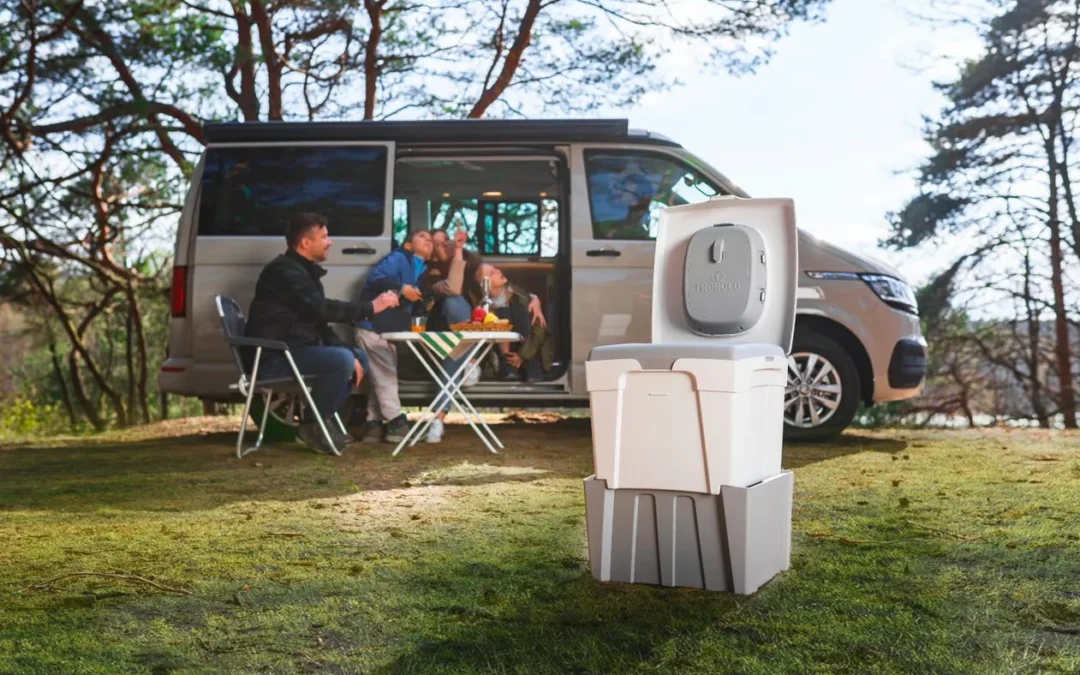
A TROBOLO in your camper van gives you greater independence at campsites, at night, and when you’re away from open restroom facilities. To ensure that the portable toilet works reliably, with minimal odor, and comfortably, proper preparation, using it while seated, sufficient bedding, and safe transport are essential. This practical guide covers the entire process for the VW California, Multivan, Caddy, Grand California, and Crafter—from choosing a campsite to stowing it away after your trip.
How the separation principle works in everyday life
A dry-separation toilet collects liquids and solids in separate containers. The front section of the separation insert directs urine into the liquid container, while solid waste and toilet paper end up in a solid waste container lined with an inlay. Because the two do not mix, the primary cause of strong toilet odors is eliminated. Bedding absorbs any remaining moisture in the solid waste container. Water, flushing, and sanitary chemicals are not required for operation. It is crucial that all users sit down when using the toilet, as this is the only way to ensure that urine reliably enters the designated front section.
Prepare Before Your First Ride
Before setting out on your trip, place a suitable liner neatly inside the solid waste container. Bedding, spare liners, a biodegradable cleaner, paper towels, and sealable storage containers should be kept within easy reach in the bathroom compartment. The toilet must be placed on a level surface and secured against sliding during the trip. Also check that both containers are properly inserted and that the intended lids are in place. A quick test run at home will alleviate any uncertainty and show all fellow travelers how to use the lid, the separator insert, and the containers.
How to Use It Correctly
It is used much like a regular toilet, but you should always sit down. After using the toilet, spread a sufficient amount of litter so that any wet areas are covered. Toilet paper may be placed in the waste container; using it sparingly will extend the container’s capacity. Small residues on the separator insert should be removed promptly with soft paper or a damp cloth. Water should not enter the liquid container unnecessarily, as additional moisture can promote odor development.
Layout and Privacy in the VW Camper
In the compact VW California, Multivan, or Caddy, it’s not just the exterior dimensions that matter—it’s the entire setup process. The toilet needs a level, sturdy surface, enough space to sit comfortably, and unobstructed access from above so the tanks can be removed. Depending on the vehicle’s layout, suitable transport options include a storage compartment, the area under a Multiflexboard, or a secured position in the rear. A portable shower or toilet stall provides privacy outside the vehicle. In the Grand California or Crafter, a larger unit can be permanently installed in the bathroom area.
Transport Safely
Loose camping gear can pose a risk during an emergency stop. For this reason, the toilet must be stowed securely in its designated compartment or fastened with a suitable restraint system while the vehicle is in motion. Liquid containers and lids must be properly closed. Despite its spill-proof design, it is recommended to check the fill level before long or very winding stretches of road. The toilet must not be placed where it interferes with seat adjustments, emergency exits, airbags, or the safe operation of the vehicle.
Plan Capacity Realistically
Manufacturer specifications regarding the number of possible uses are approximate. In reality, the number of people, the amount of water consumed, temperature, toilet paper usage, and the amount of litter used all affect the intervals. Plan more conservatively for a family than for a solo traveler, and it’s better to empty the containers in a controlled manner at a suitable location before they are completely full. Before multi-day stretches without disposal options, both containers should be empty, dry, and properly prepared. Spare liners and sufficient bedding provide a buffer but take up significantly less space than large supplies of water or chemicals.
Hygiene Without Unnecessary Chemicals
For routine cleaning, a soft cloth and a mild, eco-friendly cleaner are usually sufficient. Abrasive cleaners, chlorine-based cleaners, strong acids, alkalis, and solvent-based products can damage surfaces and sealants. Rinse the liquid reservoir with water and a suitable cleaner as needed. Diluted lemon water can help remove deposits, provided the product instructions permit it. Using separate cleaning cloths for the toilet and the rest of the RV helps prevent cross-contamination. Allow all cleaned parts to dry completely before storing them.
Organize Waste Disposal Responsibly
Remove the liquid container while it is still sealed and empty it into a toilet connected to the sewer system. Solids can be safely packaged in accordance with local regulations and disposed of with general waste. Composting requires a suitable, enclosed composter, sufficient time, proper execution, and adherence to regional regulations. Biodegradable liners do not automatically mean that the contents can be placed in any organic waste bin. Therefore, check with the campground, local municipality, or waste disposal provider for specific guidelines. Never dispose of contents in protected areas, at roadside drains, or in the great outdoors.
Avoiding Common Mistakes
- Urination while standing prevents reliable separation.
- Too little bedding leaves residual moisture in the solids tank.
- An uneven surface reduces functionality and seating comfort.
- Inappropriate, harsh cleaners can damage plastic and sealants.
- Unsecured transport endangers passengers and property.
- Scheduling a pickup too late causes unnecessary stress on the road.
Which model is best suited for which usage scenario?
BilaBox and WandaGO Lite really shine when light weight and a small pack size are the top priorities. Thanks to its height adjustment, the WandaGO offers greater seating comfort while still being compact for transport. With its larger tank capacity, higher seat, and optional permanent installation, the SilvaBlœm is particularly well-suited for spacious campers and frequent use. The five shop variants actually represent four technical models, as the SilvaBlœm in gray and white are simply different colors.
Use at night, with children, and on winter hikes
For nighttime trips to the bathroom, the path should be clear, non-slip, and dimly lit. Children should be given calm instructions and should use the bathroom only as appropriate for their age and under supervision. Although plastic parts remain easy to maintain in cold weather, liquids and cleaning supplies should still be stored according to the instructions. Condensation inside the vehicle can be reduced by ventilating it regularly. A discreet, consistent routine prevents the need to search for accessories in the dark or to move the toilet without securing it.
Pre-Departure Checklist
- Inlay correctly inserted and replacement available
- Packed enough dry bedding
- Container empty, clean, and properly sealed
- Toilet securely stowed or secured
- Cleaning products, wipes, and paper towels packaged separately
- Waste disposal options along the route were reviewed
Conclusion: A straightforward routine instead of improvisation
A TROBOLO in a camper works best when it’s an integral part of your travel plans. If you plan the installation location, accessories, secure mounting, and emptying in advance, you’ll enjoy greater comfort without needing a water connection or toilet chemicals. Here you’ll find all TROBOLO separation toilets for VW campers. Matching liners, bedding, and care products are available in the TROBOLO Accessories category.
Practical Tips for Longer Trips
On longer trips, it’s a good idea to keep a simple sanitation plan. Make a rough note of how many people are using the toilet and when it was last emptied. This isn’t an exact measurement of the fill level, but it prevents you from overestimating capacity. Stock up on supplies for at least one additional day of travel. Different waste disposal rules apply when crossing borders and moving between campsites; therefore, it’s easier to plan for reliable, standard options—such as general waste disposal and connected restrooms—than to rely on spontaneous solutions.
Separate clean and contaminated areas
Store new liners, litter, and clean wipes separately from used container lids or trash bags. A washable box for cleaning supplies prevents moisture from coming into contact with food, bedding, or clothing. Hands should be washed thoroughly after each time the trash is emptied. If water is scarce while on the go, appropriate hand sanitizer should also be included in your supplies; however, it is not a substitute for washing your hands later.
Take summer heat and downtime into account
High temperatures accelerate biological processes, making it advisable to check the toilet frequently. Do not leave the toilet in direct sunlight for extended periods, and ventilate the RV regularly. Before taking a break from use lasting several days, check the liquid reservoir and any visible residue in particular. Leaving a half-full toilet in a heated vehicle for days is less advisable than emptying it properly before continuing your trip.
Comfort is part of proper use
A restroom solution will only be used reliably if it’s accessible without a major rearrangement. Therefore, plan which items of luggage need to be moved, how privacy will be ensured, and where litter will be placed. If every trip to the restroom involves clearing out half the trunk, the routine will quickly fall by the wayside. A clearly designated space, a small light, and easily accessible supplies improve hygiene and make the arrangement more acceptable to all passengers.
Follow the operating instructions and pay attention to the model display
Product generations and features are subject to change. Therefore, the included user manual and the specifications for the specific model purchased are always binding. Be sure to check the closure, SafeShell system, mounting, and approved cleaning agents. If any parts are damaged or if there is an unusual leak, do not continue using the product without proper inspection; instead, have it inspected and, if necessary, professionally repaired.
Planning Based on Number of People and Duration of Trip
A person on a weekend trip has different needs than a family of four on a long road trip. When making your choices and planning your day, don’t just factor in regular bathroom breaks—above all, plan for more frequent use of the waste container. Small containers are lighter and take up less space, but they need to be emptied more often. Larger-capacity containers reduce the number of trips, but when full, they add weight and take up more space. A wise decision, therefore, always takes into account the most challenging waste disposal situation along the planned route—not just the most convenient campground.
Test it in the car before buying
Mark the outer dimensions of the desired model with cardboard or tape in the designated spot. With the doors closed, the bed extended, and the front seats rotated, check to see if there is enough space. Also simulate opening the door from the top, removing the containers, and making your way to the exit. This simple test often reveals more than a mere comparison of measurements. Seat height can also be simulated using a sturdy box so that all users can realistically assess comfort and ease of standing up.
Calculate Accessory Consumption Wisely
Inlays and litter are consumables. Your actual needs depend on frequency of use, emptying schedule, and humidity. For longer trips, it’s a good idea to bring a spare supply without taking up precious storage space with oversized quantities. Store the litter in a dry, sealed container so it can continue to absorb moisture effectively. Keep inlays away from sharp edges and heat. A small, clearly labeled hygiene kit makes refilling, cleaning, and emptying easier and prevents confusion with kitchen utensils.
Take a moment to reflect after each trip
After your first few trips, take note of how well the storage space, seat height, capacity, and amount of accessories worked out. Maybe you’ll need less bedding next time, or perhaps emptying the toilet earlier would be more convenient, or the toilet needs to be placed in a more accessible spot. A brief evaluation like this improves the process without changing the basic system. Families in particular benefit from clear responsibilities: one person checks fill levels, another restocks supplies, and everyone knows the rules for using the toilet while seated.
This ensures that the mobile sanitation solution remains consistently traceable, convenient, and hygienically organized even while on the go.
Frequently Asked Questions
Do men also have to urinate while sitting?
Yes. The seated position is necessary to ensure that the separation insert reliably directs liquids and solids into the designated containers.
Can toilet paper be disposed of in the solid waste bin?
Yes, standard toilet paper can be disposed of along with solid waste. Using it sparingly helps conserve capacity.
Can the toilet remain full while driving?
Models equipped with the SafeShell system are designed to prevent spills during transport. Nevertheless, they must be properly closed and secured to prevent slipping; it is advisable to check the fill level before long trips.
Where should I put the toilet in the California?
On a level, stable surface with sufficient space to move around. The specific location depends on the model, configuration, and privacy solution.
How do I prevent odors?
Consistent separation, appropriate bedding, clean surfaces, timely emptying, and dry storage are the most important measures.